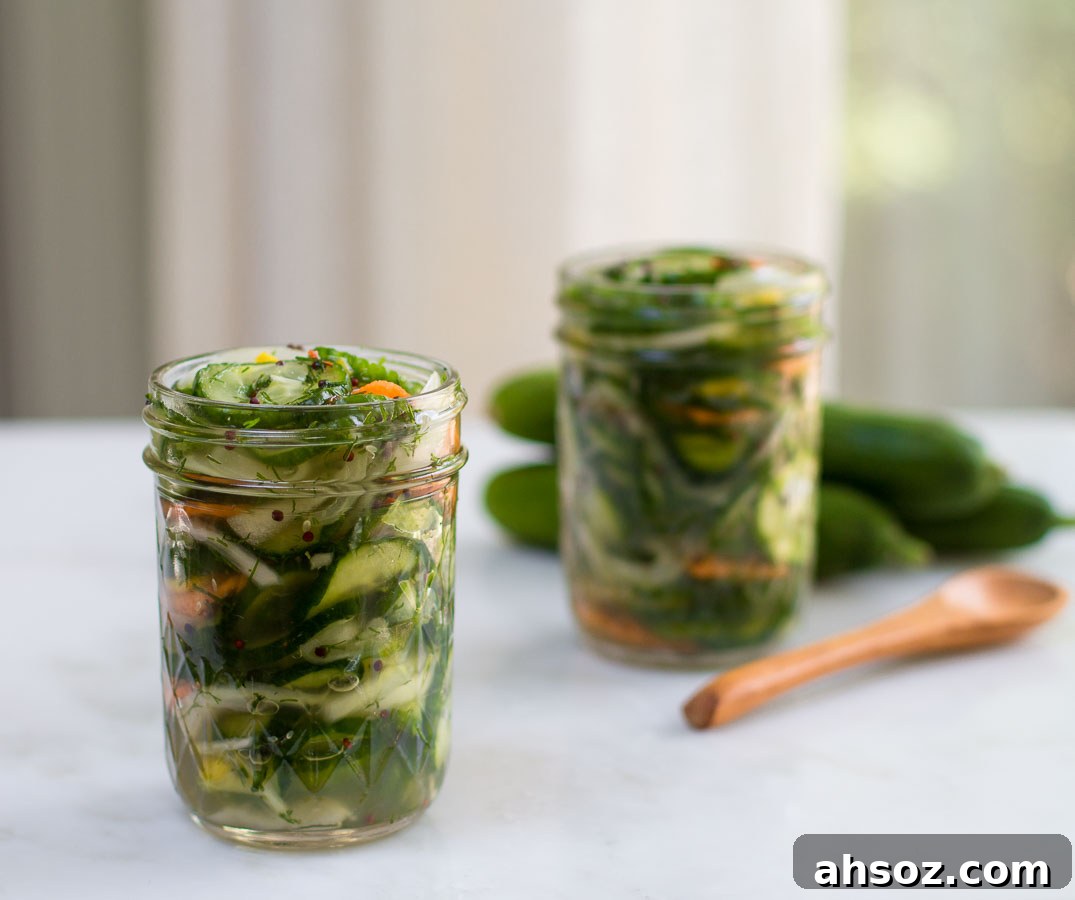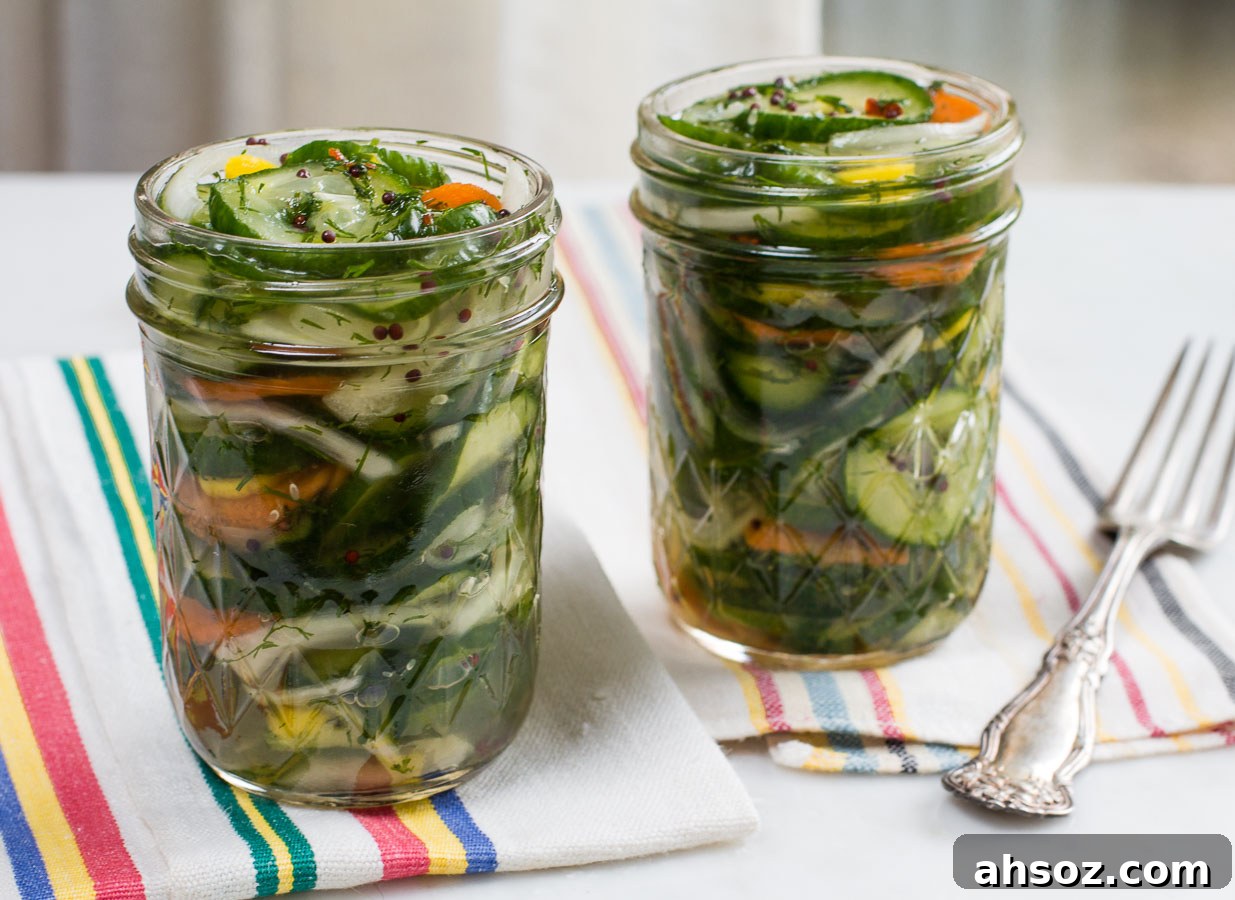
Homemade refrigerator pickles are fun to make, wonderfully crisp, and full of bright, tangy flavor. Best of all, they require no canning equipment, no steam kettle, and no vacuum-sealed lids. These easy refrigerator pickles are made with a lively brine seasoned with mustard seeds, red pepper flakes, freshly cracked black pepper, garlic, carrots, onions, and plenty of fresh dill. They are lower in salt and sugar than many store-bought versions, yet they taste fresh, bold, and gourmet enough to proudly serve from your own kitchen.
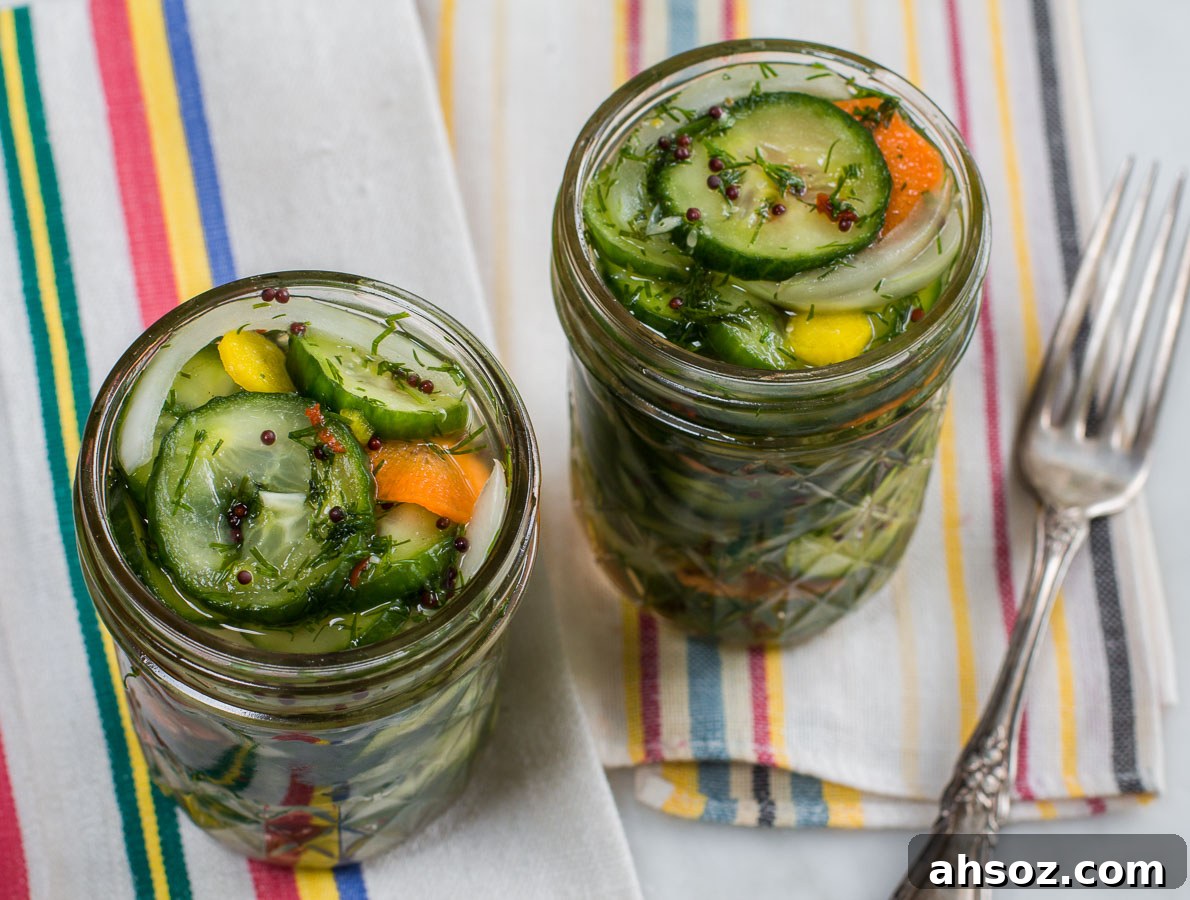
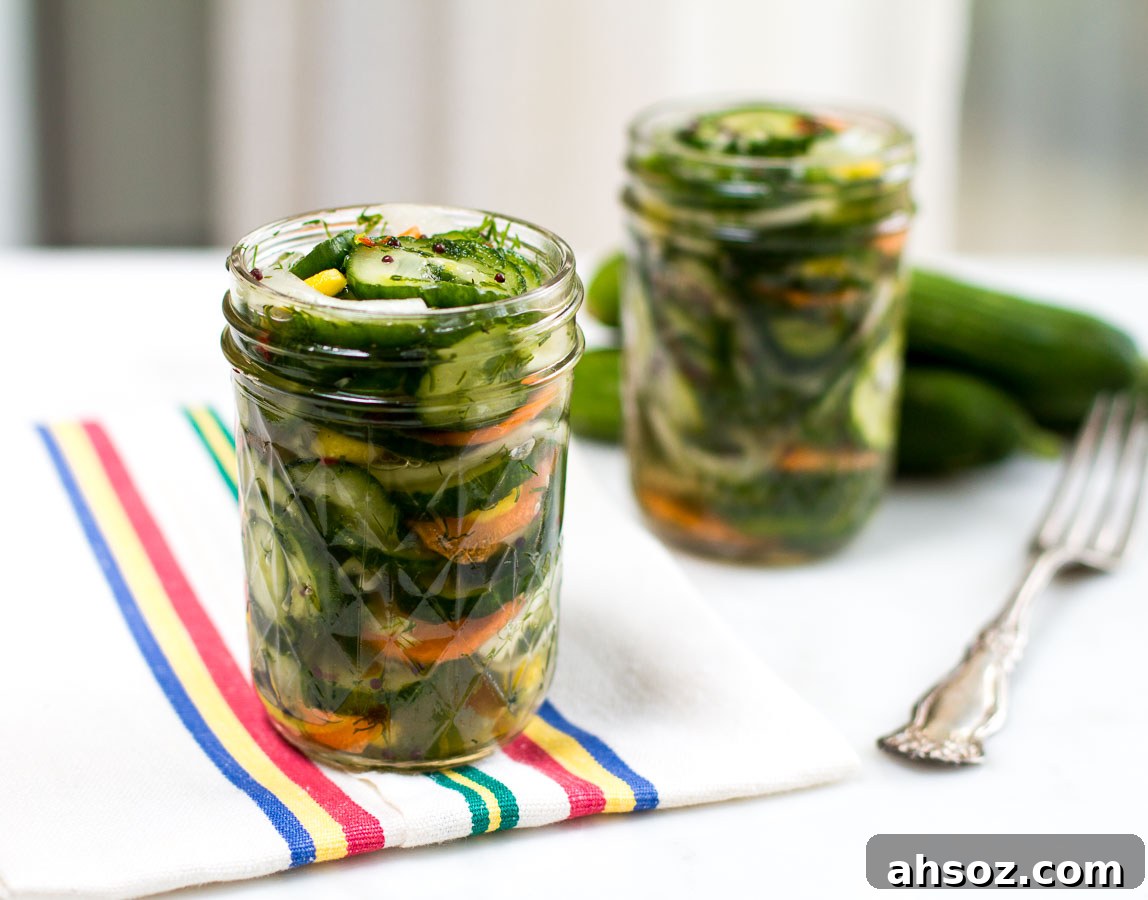
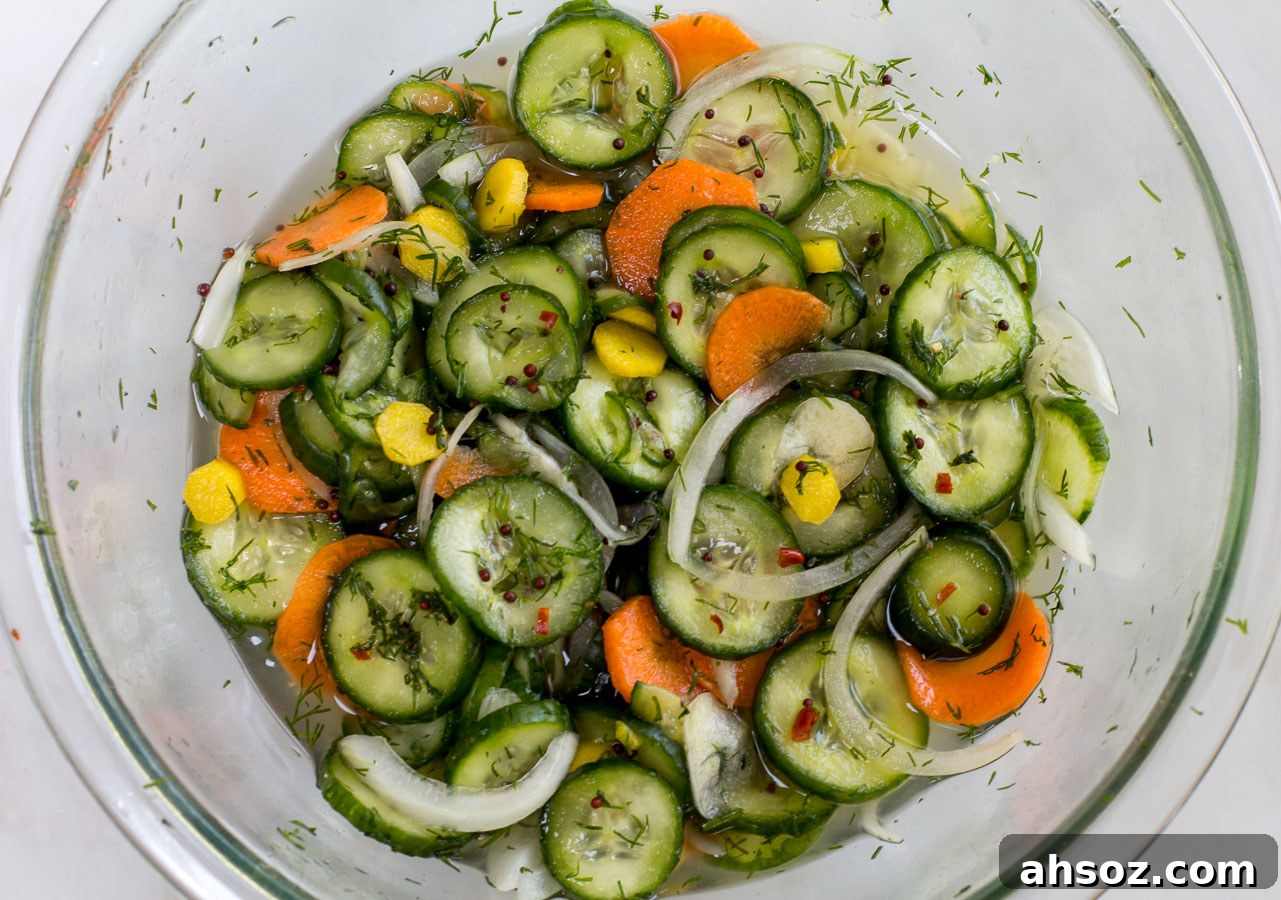
Refrigerator pickles are one of the easiest homemade pickles to prepare. Because they are stored cold in the refrigerator, you do not need special preserving tools, traditional canning jars, or complicated processing steps. Simply prepare the cucumbers and vegetables, pour the seasoned brine over the top, add fresh dill, and let time do the rest. In less than 30 minutes of hands-on work, you can have jars of crisp, flavorful pickles ready to chill.
These homemade refrigerator pickles are especially appealing because they deliver plenty of flavor without relying on excess sodium or sugar. The brine is bright and tangy, while sliced carrots and sweet onions add gentle sweetness and texture. Garlic gives the pickles a savory bite, red pepper flakes bring a touch of heat, and brown mustard seeds offer a deeper, more pungent flavor than yellow mustard seeds. Freshly cracked black pepper finishes the brine with warmth and aroma.
My mantra: many foods made in your own kitchen are more flavorful, more wholesome, and more satisfying than store-bought versions. Pickles are no exception.
Ingredients in a major supermarket brand:
cucumbers, water, distilled vinegar, salt, calcium chloride, alum, natural flavors, yellow #5, sodium benzoate to preserve freshness, and polysorbate 80. Contains Yellow #5.
That ingredient list is a good reminder of why homemade refrigerator pickles are worth making. A simple cucumber does not need artificial color, unnecessary additives, or extra preservatives to taste delicious. When you make pickles at home, you control what goes into the jar. You can use real vegetables, fresh herbs, garlic, spices, vinegar, and a balanced brine that suits your taste. The result is clean, crunchy, tangy, and far more personal than anything pulled from a supermarket shelf.
If you are craving pickles and do not have time to make them, farmers’ market vendors can be a wonderful source, especially when they use locally grown cucumbers and real ingredients. Still, making your own homemade pickles is incredibly rewarding. You can adjust the heat, increase the garlic, add more dill, or change the balance of vegetables until the flavor is exactly what you love. Each batch can be slightly different, and that is part of the fun.
Persian cucumbers are a great choice for this refrigerator pickle recipe. Their thin skins, crisp texture, and small seedless centers make them ideal for soaking up brine while staying pleasantly crunchy. They are also available throughout the year, which means you can enjoy homemade refrigerator pickles in any season. When Kirby cucumbers are at their peak, especially during a fresh local harvest, they also work beautifully. Their firm texture and classic pickle shape make them a favorite for this style of preparation.
As the pickles rest in the refrigerator, their flavor continues to develop. The cucumbers become more tangy, the garlic and spices deepen, and the dill infuses the brine with its fresh herbal character. The carrots and onions also absorb the seasoned liquid, making them delicious additions to sandwiches, burgers, salads, or snack plates. The longer they sit, the more the flavors mingle, creating a jar of pickles that tastes brighter and better with time.
Make an extra batch if you can. These crunchy refrigerator pickles are perfect for topping summer burgers, layering into sandwiches, serving alongside grilled foods, or chopping into homemade tartar sauce. They also make a thoughtful homemade food gift. A glass jar filled with crisp pickles, carrots, onions, garlic, spices, and fresh dill looks beautiful and tastes even better. It is a simple kitchen project that feels generous, practical, and special.
Enjoy every crunchy, tangy bite!
Karen